





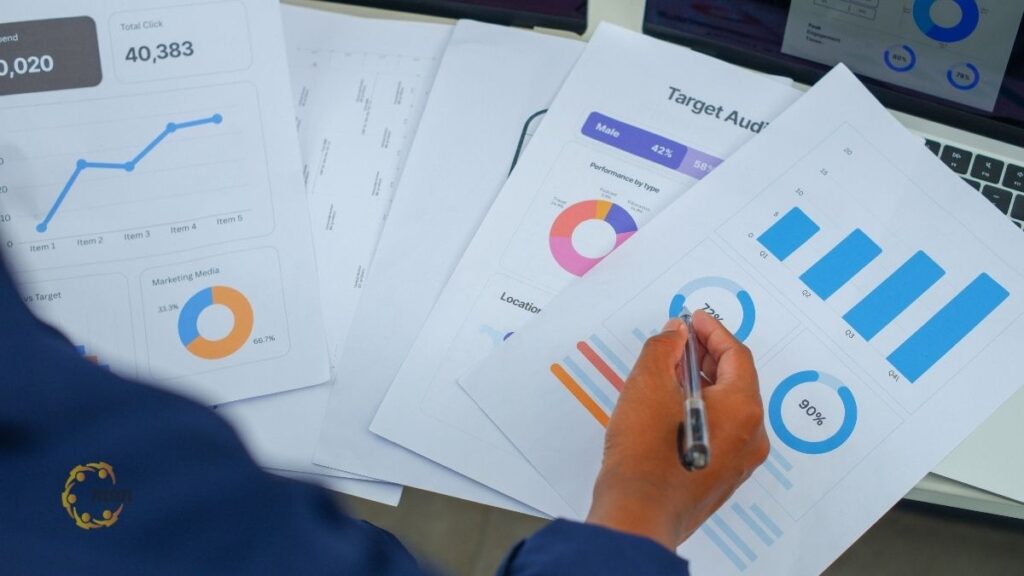
The current centralized tax management system is no longer simply a tool for comparing data, but has progressed to in-depth analysis of value shifts throughout the entire global supply chain. Inspection practice shows that tax authorities are shifting their focus from documentary forms to the economic nature of transactions. In this context, transfer pricing documentation is a crucial legal basis for businesses to demonstrate the reasonableness of their pricing policies, thereby minimizing the risk of being overcharged.
The tax management landscape for related-party transactions in 2026
Entering 2026, the General Department of Taxation of Vietnam has maximized the power of artificial intelligence (AI) and big data to review transfer pricing practices. The integration of data from the cross-border reporting mechanism (CbCR) allows tax authorities to gain a clear picture of the entire corporation's profits across all territories.
A centralized tax management system goes beyond simply verifying data; it also analyzes the dynamics of the global value chain. The current tax audits focus on the economic substance rather than just the documentation. Therefore, transfer pricing documentation is the only legal shield that allows businesses to explain the reasonableness of their transaction prices and avoid the risk of being unfairly assessed for taxes, potentially causing billions of dong in losses.
Understanding Transfer Pricing Documentation Correctly

To effectively manage tax risks, businesses first need a thorough understanding of the technical nature and legal structure of this documentation. A correct understanding not only helps businesses comply with regulations but also optimizes the data collection process and builds arguments to defend pricing.
Definition and Nature
According to OECD guidelines and Decree 132/2020/ND-CP (updated by the latest guiding circulars until 2026), transfer pricing documentation is a collection of documents, data, and economic analysis aimed at demonstrating that the value of transactions between related parties is determined according to the Arm's Length Principle.
Standard three-tiered document structure in accordance with international practice.
To ensure full compliance, businesses need to prepare a set of documents consisting of three main components:
- Local File: Focuses on specific transactions within the Vietnamese entity. This document details the organizational structure, business strategy, list of competitors, and a detailed analysis of related-party transactions arising during the fiscal year. This is the most important document for direct presentation to the local inspection team.
- Global Master File: Provides an overview of the group's business operations worldwide, including ownership structure, key revenue streams, intangible asset portfolio, and internal financial policies. This file helps tax authorities understand the position and contribution of the Vietnamese entity in the group's value chain.
- Country-by-Country Profit Report (CbC Report): This is the most sensitive document, showing the distribution of income, taxes, and economic activities among the countries where the corporation has a presence. Discrepancies between reported profits and actual operating results in Vietnam compared to other countries will be a sign for tax authorities to initiate an audit of transfer pricing records.
Subjects and conditions under which a Transfer Pricing Documentation File is required

Determining whether you are eligible to file an application is a crucial step to avoid unnecessary procedural errors.
Identify the relationship
An affiliated relationship is defined when one party directly or indirectly participates in the management, control, or capital contribution of the other party. Particularly in 2026, the tax authorities will focus on the following cases:
- The business owns at least 25% of the owner's equity.
- Loans account for at least 25% of owner's equity and over 50% of the total value of medium and long-term debt.
- Joint management relationships among members of the same family or parent company involve periodic rotations of senior personnel.
See details: Forms of related-party transactions.
Exemption thresholds
Businesses are exempt from preparing transfer pricing documentation (but must still submit an appendix with the tax return) if they fall under the following cases:
- Annual revenue is under VND 50 billion and total value of related-party transactions is under VND 30 billion.
- The company has signed and implemented an Advance Pricing Agreement (APA) and has submitted its annual report as required.
- Businesses performing simple functions (distribution or contract manufacturing), with no intangible assets and revenue under VND 200 billion, must have an earnings before interest and taxes (EBIT) margin of 5% (distribution), 10% (manufacturing), or 15% (contract manufacturing) or higher.
See details: No related-party transaction documentation is required.
Standard procedure for preparing transfer pricing documentation.

Preparing transfer pricing documentation is not just about collecting data; it's a process of in-depth economic analysis requiring an understanding of both tax law and the market.
Step 1: Functional, Asset and Risk Analysis (FAR Analysis)
This is considered the most important and also the most difficult part of the application process. The expert will have to answer the question: "Who does what and who benefits?".
- Function: Which party performs the high value-added stages (R&D, design)? Which party only performs support functions (warehousing, administration)?
- Assets: Identify tangible assets (factories) and especially intangible assets (technological know-how, trademarks). In 2026, the valuation of intangible assets will become a focal point in tax disputes.
- Risk: Who bears the risk if the product is defective? Who bears the risk of exchange rate fluctuations? Core principle: Profits must be allocated proportionally to the functions performed and the risks borne.
Step 2: Choose the optimal pricing method.
Based on the FAR results, businesses must choose the most appropriate method from the five methods stipulated in Decree 132/2020/ND-CP:
- The Comparative Independent Transaction Price (CUP) method: This method is applied when there are similar transactions in terms of product and transaction conditions between independent parties. This is the preferred method if accurate data is available.
- Resale Price Method: This method is commonly used by companies that perform simple distribution functions, do not change the nature of the product, and do not own significant intangible assets.
- Cost Plus Method: Suitable for units that manufacture on order, process orders, or provide internal services within a corporation.
- The Net Profit Margin (NPRI) comparison method: This is the most popular method in Vietnam due to its flexibility in finding comparative data through indicators such as ROS, ROA, or profit margin on costs.
- Profit Split: This method is applied to transactions that are unique, closed-loop, or where the parties jointly contribute unique intangible assets to the value chain that cannot be separated and compared individually.
Step 3: Benchmarking - Searching for comparative market data.
Businesses need to find at least 3-5 independent businesses with similar characteristics. Using international databases such as Orbis, Bloomberg, or Thomson Reuters is essential to ensure objectivity.
Note: In 2026, tax authorities typically rejected comparative data from countries that did not have comparable levels of economic development to Vietnam.
Step 4: Economic analysis and adjustment for discrepancies
After obtaining the comparative data, the expert needs to make significant adjustments.
For example: If your business has a 90-day payment term but comparable companies only have 30 days, an opportunity cost adjustment for capital must be made to ensure the transfer pricing documentation accurately reflects objective reality.
Step 5: Complete the application and fill out the Appendix.
Data from the transfer pricing records will be extracted into Appendices I, II, III, and IV. Discrepancies between the data in the records and the data declared for tax purposes are the leading cause of immediate tax assessment without much litigation.
The process requires in-depth expertise in related-party transactions, from FAR analysis and pricing methodologies to comparative data analysis. Your company should proactively seek advice. related party transaction advisory services We source our services from reputable and experienced related-party transaction firms like MAN – Master Accountant Network to ensure that your transfer pricing documentation is as convincing as possible.
Significant changes

The constant evolution of international tax rules requires businesses to continuously update themselves on the latest developments. 2026 will not only see changes in purely legal regulations but also shifts in how tax authorities manage and reconcile data. Below are key trends directly impacting how transfer pricing strategies are developed in the current period.
Impact of the Global Minimum Tax (Pillar Two)
In 2026, Vietnam implemented a minimum domestic additional tax (QDMTT). This made transfer pricing documentation more sensitive than ever. A price adjustment that reduces profit in Vietnam could result in an effective tax rate (ETR) lower than 15%, forcing businesses to pay additional taxes. Therefore, current transfer pricing policies must be integrated with global tax strategies.
Digital Auditing Techniques (E-Audit) and Centralized Databases
The tax authorities now possess a separate comparative data system. If a company's profit margin falls outside the "interquartile range" established by the tax authorities for that industry, the system will automatically place the company on a watchlist. Therefore, preparing transfer pricing documentation should be done annually instead of every 3-5 years.
Risks and penalties for missing Transfer Pricing Documentation
Neglecting to prepare the necessary documents can lead to unforeseen consequences:
- Tax assessment: The tax authorities have the power to reject self-declared prices and determine a profit margin based on confidential industry data. Businesses have virtually no chance of successfully appealing without records of transfer pricing as counter-evidence.
- Administrative penalties: The fines for procedural violations can amount to hundreds of millions of VND, but the most serious penalty is the late payment penalty (0.031 TP3T/day) accumulated over many years.
- Blacklist: Businesses with low compliance ratings, resulting in all import and export shipments being subject to red channel inspections, causing disruptions to the supply chain.
Therefore, proper investment in this area is necessary. Transfer pricing consultancy Right from the start, a small investment can save a business from enormous financial risks in the future.
Checklist for optimizing documentation for the 2026 tax year.
To create a perfect transfer pricing document, the company's management needs to check:
- Do the internal borrowing transactions comply with the regulations on limiting interest expense (30% EBITDA)?
- Is the Master File available for delivery within 15-30 days upon request?
- Have the comparative data for independent businesses been updated for the most recent fiscal year?
- Consistency of transfer pricing policies across the entire group system.
Conclude
Transfer pricing documentation is not simply a set of documents to be prepared for, but the result of a smart tax risk management process. In the context of a volatile 2026 with the emergence of new international tax regulations, possessing high-quality documentation demonstrates a company's professionalism and compliance.
Contact MAN – Master Accountant Network for free support and advice!
Contact information MAN – Master Accountant Network
- Address: No. 19A, Street 43, Tan Thuan Ward, Ho Chi Minh City
- Mobile/Zalo: 0903 963 163 – 0903 428 622
- Email: man@man.net.vn
Content production by: Mr. Le Hoang Tuyen – Founder and CEO of MAN – Master Accountant Network, CPA Vietnam with over 30 years of experience in accounting, auditing, and financial consulting.
Frequently Asked Questions about Transfer Pricing Documentation
Yes, businesses with related-party transactions must prepare the necessary documents before filing their corporate income tax return and keep them on file for presentation upon request.
It is absolutely essential. Businesses that incur losses must prepare thorough documentation to explain the objective reasons for their losses, avoiding the tax authorities from arbitrarily determining market profits.
Typically, the processing time is 30 working days from the date of receipt of the request for transfer pricing inspection/audit.
Businesses that have transactions with related parties and are not exempt from regulations must prepare transfer pricing documentation. Common cases include businesses with ownership relationships from 25%, large internal borrowings, or those under the joint management of a multinational corporation.
The biggest risk is that the tax authorities will reassess the transaction price and taxable profit based on internal comparative data. This can lead to significant tax arrears, penalties, and late payment fees that can drag on for years, negatively impacting the company's reputation and compliance rating.
A well-prepared filing requires accurate FAR analysis, appropriate valuation methodology selection, and reliable comparative data. Furthermore, consistency between filings, financial statements, and tax returns is crucial in minimizing the risk of being subject to audits.Is it mandatory to submit transfer pricing documentation annually?
If a business reports losses for an extended period, is it necessary to file a report?
What is the deadline for submitting documents to the tax authorities?
Which businesses are required to prepare transfer pricing documentation?
What is the biggest risk of not having a record of transfer pricing?
How can transfer pricing documentation be standardized and secure during an audit?