




Hạch toán mượn tiền giám đốc là việc ghi nhận vào sổ sách kế toán khoản tiền mà giám đốc (hoặc thành viên điều hành công ty) cho doanh nghiệp vay/mượn để bổ sung vốn hoạt động. Từ 01/01/2026, khoản này được hạch toán vào Tài khoản 3411 theo Thông tư 99/2025/TT-BTC, đồng thời cần xác định có phải giao dịch liên kết theo Decree 132/2020/ND-CP hay không để tránh rủi ro bị ấn định thuế.
Tóm tắt trọng tâm về hạch toán mượn tiền giám đốc
Trong nhiều doanh nghiệp nhỏ và vừa tại Việt Nam, tình trạng thiếu hụt vốn lưu động tạm thời không phải là chuyện hiếm gặp. Và một trong những giải pháp nhanh nhất, ít thủ tục nhất chính là giám đốc. Nghe thì đơn giản, nhưng đằng sau nghiệp vụ tưởng chừng nhỏ này lại ẩn chứa hai rủi ro lớn mà không phải kế toán nào cũng lường trước:
- Hạch toán sai tài khoản hoặc sai thời điểm ghi nhận khiến báo cáo tài chính sai lệch.
- Không xác định đúng bản chất giao dịch có phải giao dịch liên kết hay không, dẫn đến nguy cơ bị cơ quan thuế ấn định thu nhập và truy thu.
Bài viết dưới đây sẽ giúp bạn giải quyết trọn vẹn cả hai vấn đề trên, dựa trên ba căn cứ pháp lý mới và quan trọng nhất hiện nay: Luật Doanh nghiệp 2020, Thông tư 99/2025/TT-BTC và Nghị định 132/2020/NĐ-CP.
Quy định về việc giám đốc cho doanh nghiệp mượn tiền

Khi thực hiện hạch toán mượn tiền giám đốc, doanh nghiệp cần căn cứ vào các quy định pháp luật liên quan để xác định đúng bản chất khoản tiền nhận được và cách ghi nhận trên hệ thống kế toán. Một số căn cứ pháp lý quan trọng gồm:
Luật doanh nghiệp 2020
Theo quy định tại Luật Doanh nghiệp 2020, doanh nghiệp có quyền huy động vốn từ nhiều nguồn khác nhau, bao gồm việc vay vốn từ tổ chức, cá nhân. Vì vậy, trường hợp giám đốc cho công ty vay tiền được xem là giao dịch dân sự hợp pháp nếu được thực hiện đúng quy định và có đầy đủ hồ sơ chứng minh.
Thông tư 99/2025/TT-BTC
Theo Thông tư 99/2025/TT-BTC về chế độ kế toán doanh nghiệp, các khoản vay phải được phản ánh đúng bản chất trên báo cáo tài chính. Doanh nghiệp cần phân biệt rõ giữa khoản vay phải trả và khoản vốn chủ sở hữu nhằm tránh sai lệch số liệu kế toán.
Đối với khoản vay có phát sinh lãi suất, doanh nghiệp cần ghi nhận chi phí lãi vay theo đúng nguyên tắc kế toán, đảm bảo khoản chi phí này có đầy đủ căn cứ hợp lệ.
Decree 132/2020/ND-CP on related-party transactions
Trong một số trường hợp, khoản vay giữa công ty và giám đốc có thể được xem xét là giao dịch liên kết theo quy định tại Nghị định 132/2020/NĐ-CP. Khi đó doanh nghiệp cần thực hiện các nghĩa vụ liên quan đến kê khai, xác định giá giao dịch liên kết và hồ sơ chứng minh theo quy định.
Hồ sơ cần chuẩn bị khi hạch toán mượn tiền giám đốc

Để đảm bảo khoản vay được cơ quan thuế và kiểm toán chấp nhận, doanh nghiệp cần xây dựng bộ hồ sơ đầy đủ trước khi thực hiện hạch toán mượn tiền giám đốc. Các chứng từ quan trọng bao gồm:
Hợp đồng vay tiền giữa giám đốc và công ty
Đây là căn cứ thể hiện rõ quan hệ vay mượn giữa hai bên, trong đó cần nêu các thông tin:
- Số tiền vay
- Thời hạn vay
- Phương thức thanh toán
- Điều khoản hoàn trả
- Mức lãi suất hoặc xác nhận khoản vay không tính lãi.
Nếu khoản vay không có lãi suất, doanh nghiệp nên thể hiện rõ trong hợp đồng để tránh phát sinh tranh luận về bản chất giao dịch.
Phiếu thu, phiếu chi hoặc chứng từ ngân hàng
Trường hợp giám đốc chuyển tiền cho công ty:
- Nếu nhận bằng tiền mặt: lập phiếu thu
- Nếu nhận qua ngân hàng: lưu giấy báo Có, sao kê giao dịch.
Khi công ty hoàn trả khoản vay cần có phiếu chi hoặc chứng từ chuyển khoản tương ứng.
Sổ kế toán theo dõi khoản vay
Kế toán cần theo dõi riêng khoản tiền này thông qua:
- Sổ nhật ký chung;
- Sổ cái tài khoản liên quan;
- Sổ chi tiết khoản vay.
Việc theo dõi chi tiết giúp doanh nghiệp kiểm soát số dư vay, thời hạn thanh toán và tránh nhầm lẫn với các khoản phải trả khác.
Cách hạch toán mượn tiền giám đốc theo từng trường hợp cụ thể
Tùy thuộc vào mục đích và bản chất của khoản tiền nhận được, cách hạch toán mượn tiền giám đốc sẽ có sự khác nhau. Kế toán cần xác định rõ đây là vốn góp, khoản vay không lãi suất hay khoản vay có tính lãi.
Trường hợp mượn tiền không lãi suất
Đây là tình huống phổ biến nhất trong thực tế, giám đốc hỗ trợ tài chính cho công ty mà không yêu cầu bất kỳ khoản lãi nào.
Khi công ty nhận tiền vay:
- Nợ TK 112 (Tiền gửi ngân hàng)
- Có TK 3411 (Các khoản đi vay).
Khi công ty hoàn trả khoản vay:
- Nợ TK 3411
- Có TK 112.
Example: Ngày 08/05/2025, giám đốc công ty TNHH A chuyển khoản vào công ty 300.000.000 đồng để bổ sung vốn lưu động, không tính lãi, cam kết hoàn trả trong vòng 6 tháng. Kế toán ghi nhận:
- Nợ TK 112: 300.000.000 đồng
- Có TK 3411: 300.000.000 đồng
Đến ngày 08/11/2025, công ty hoàn trả toàn bộ số tiền trên:
- Nợ TK 3411: 300.000.000 đồng
- Có TK 112: 300.000.000 đồng.
Trường hợp mượn tiền có phát sinh lãi
Khi giám đốc cho công ty vay có tính lãi, kế toán cần ghi nhận thêm phần chi phí lãi vay. Định kỳ ghi nhận chi phí lãi vay như sau:
- Nợ TK 635 (Chi phí tài chính)
- Có TK 3411.
Khi trả nợ gốc và lãi:
- Nợ TK 3411
- Nợ TK 635
- Có TK 112.
Lưu ý quan trọng về mức lãi suất: Điều 468 Bộ luật Dân sự 2015, lãi suất thỏa thuận không được vượt quá 20%/năm. Đồng thời, nếu công ty trả lãi cho cá nhân (giám đốc), công ty có nghĩa vụ khấu trừ 5% thuế thu nhập cá nhân trên khoản lãi trước khi chi trả, theo quy định về thuế TNCN đối với thu nhập từ đầu tư vốn. Ngoài ra, để chi phí lãi vay được tính vào chi phí hợp lý khi quyết toán thuế TNDN, mức lãi suất phải phù hợp với mặt bằng lãi suất vay bình quân cùng kỳ hạn của ngân hàng, tránh trường hợp bị loại trừ chi phí do vượt mức hợp lý.
Trường hợp góp vốn nhưng chưa hoàn tất thủ tục
Một sai sót phổ biến khi thực hiện hạch toán mượn tiền giám đốc là nhầm lẫn giữa khoản vay và khoản góp vốn. Trường hợp này thường xảy ra khi giám đốc đồng thời là chủ sở hữu hoặc thành viên góp vốn, chuyển tiền vào công ty nhưng chưa hoàn tất thủ tục góp vốn theo quy định của Luật Doanh nghiệp 2020.
Nếu xác định là khoản góp vốn, hạch toán:
- Nợ TK 112
- Có TK 411 (Vốn chủ sở hữu).
Nếu sau thời hạn cam kết mà thủ tục góp vốn vẫn chưa hoàn tất, khoản tiền này cần được chuyển đổi bản chất thành khoản vay từ giám đốc và hạch toán lại theo TK 3411 như hướng dẫn ở 02 Trường hợp trên. Việc xác định đúng bản chất giao dịch ngay từ đầu là điều kiện tiên quyết để hạch toán mượn tiền giám đốc chính xác, tránh phải điều chỉnh hồi tố về sau.
Mượn tiền giám đốc có phải giao dịch liên kết không?
Đây là vấn đề mà rất nhiều kế toán và chủ doanh nghiệp còn mơ hồ, trong khi việc xác định sai có thể dẫn đến hậu quả về thuế đáng kể. Việc xác định đúng cũng là bước bắt buộc trước khi hoàn tất hạch toán mượn tiền giám đốc trên báo cáo tài chính năm.
Điều kiện xác định giao dịch liên kết theo Nghị định 132/2020/NĐ-CP
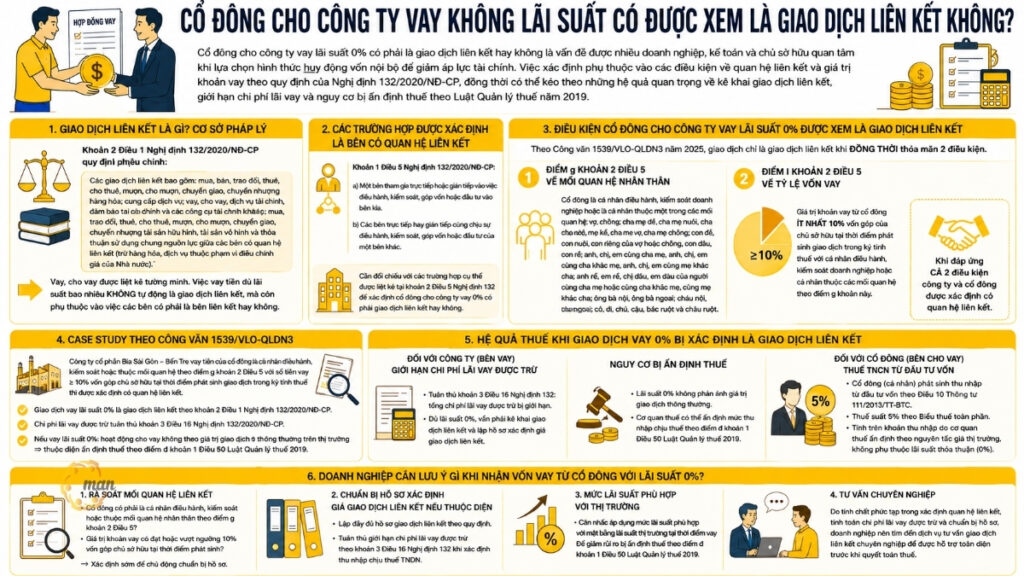
Căn cứ điểm l khoản 2 Điều 5 Nghị định 132/2020/NĐ-CP, một giao dịch vay hoặc mượn tiền giữa doanh nghiệp và giám đốc được xác định là giao dịch liên kết khi thỏa mãn đồng thời cả hai điều kiện sau:
- Giám Tổng giám đốc, hoặc thành viên Hội đồng thành viên là người trực tiếp điều hành, kiểm soát doanh nghiệp, điều kiện này áp dụng kể cả trong trường hợp khoản vay không tính lãi.
- Giá trị khoản vay từ 10% vốn góp của chủ sở hữu trở lên tại thời điểm phát sinh giao dịch trong kỳ tính thuế.
Khi và chỉ khi cả hai điều kiện trên cùng được thỏa mãn, giao dịch mới được xác định là giao dịch liên kết theo quy định hiện hành.
Trường hợp không phải giao dịch liên kết
Nếu khoản vay không đạt mức 10% vốn góp của chủ sở hữu, hoặc giám đốc không thuộc nhóm cá nhân điều hành, kiểm soát doanh nghiệp (ví dụ giám đốc chỉ đứng tên nhưng không có thực quyền điều hành, hoặc chức danh mang tính hình thức), giao dịch này không bị coi là giao dịch liên kết.
Trong trường hợp này, việc hạch toán mượn tiền giám đốc thực hiện như một khoản vay dân sự thông thường theo hướng dẫn tại phần trên, doanh nghiệp không phải lập hồ sơ xác định giá giao dịch liên kết, không bị áp trần interest expense theo Nghị định 132/2020/NĐ-CP.
Trường hợp là giao dịch liên kết
Khi khoản vay từ giám đốc được xác định là giao dịch liên kết, doanh nghiệp phát sinh thêm các nghĩa vụ:
- Kê khai giao dịch liên kết vay tiền giám đốc trong hồ sơ khai quyết toán thuế thu nhập doanh nghiệp
- Lập hồ sơ xác định giá giao dịch liên kết, chứng minh giao dịch tuân thủ nguyên tắc giao dịch độc lập (Arm’s Length)
- Chi phí lãi vay khi đó bị khống chế trong mức trần theo tổng lợi nhuận thuần cộng chi phí lãi vay và chi phí khấu hao trong kỳ, theo quy định về chống chuyển giá.
Đặc biệt, nếu khoản vay không tính lãi hoặc lãi suất thấp hơn mặt bằng thị trường, cơ quan thuế có cơ sở để coi phần chênh lệch lãi suất này là thu nhập chịu thuế của giám đốc và tiến hành ấn định thuế thu nhập cá nhân tương ứng, theo nguyên tắc ấn định thuế đối với giao dịch không theo giá thị trường quy định tại Điều 50 Luật Quản lý thuế số 38/2019/QH14.
Tìm hiểu thêm: Formula for calculating interest on related-party transactions.
Rủi ro khi mượn tiền giám đốc không đúng quy định

Ba nhóm rủi ro chính mà doanh nghiệp có thể gặp phải khi hạch toán mượn tiền giám đốc không đúng quy định được tổng hợp trong bảng dưới đây:
| Type of risk | Reason | Consequence |
| Bị ấn định thuế thu nhập cá nhân | Giao dịch được xác định là giao dịch liên kết nhưng có dấu hiệu không tuân thủ nguyên tắc giao dịch độc lập (vay không lãi hoặc lãi thấp hơn thị trường). | Cơ quan thuế ấn định phần chênh lệch lãi suất là thu nhập chịu thuế của giám đốc, áp thuế suất 5% trên thu nhập bị ấn định. |
| Chi phí lãi vay không được trừ khi tính thuế TNDN | Mức lãi suất trả cho giám đốc vượt quá 150% mức lãi suất cơ bản do Ngân hàng Nhà nước công bố, hoặc vượt trần theo quy định về chống chuyển giá (đối với giao dịch liên kết). | Phần chi phí lãi vay vượt mức bị loại trừ khi xác định thu nhập chịu thuế TNDN, làm tăng số thuế TNDN phải nộp. |
| Bị coi là giao dịch khống | Lập hợp đồng “mượn tiền giám đốc” khống để hợp thức hóa khoản chi tiền mặt không có chứng từ hợp lệ, hoặc bù đắp quỹ tiền mặt thiếu hụt do đã ghi nhận chi phí khống trước đó. | Bị truy thu thuế, xử phạt vi phạm hành chính về thuế, thậm chí có thể bị xem xét trách nhiệm hình sự nếu mức độ vi phạm nghiêm trọng. |
Việc bị coi là giao dịch khống là nghiêm trọng nhất, vì đây không chỉ là vấn đề về kỹ thuật hạch toán mà còn liên quan đến tính hợp pháp của toàn bộ giao dịch. Đây là lý do vì sao việc hạch toán mượn tiền giám đốc luôn phải đi kèm hồ sơ, chứng từ đầy đủ, phản ánh đúng bản chất giao dịch phát sinh.
Conclude
Việc quản lý và ghi nhận đúng khoản tiền giám đốc hỗ trợ doanh nghiệp có vai trò quan trọng trong việc đảm bảo tính minh bạch của hệ thống kế toán, báo cáo tài chính và đặc biệt về giao dịch liên kết. Doanh nghiệp cần xác định rõ bản chất của khoản tiền nhận được là khoản vay, khoản góp vốn hay khoản phải trả để lựa chọn phương pháp xử lý phù hợp.
Một sai sót nhỏ trong việc phân loại khoản vay, ghi nhận lãi vay hoặc thiếu căn cứ chứng minh giao dịch có thể khiến doanh nghiệp gặp khó khăn khi quyết toán thuế. Vì vậy, việc xây dựng quy trình chặt chẽ ngay từ đầu sẽ giúp doanh nghiệp kiểm soát tốt dòng tiền và đảm bảo tuân thủ quy định pháp luật.
Nếu doanh nghiệp cần hỗ trợ rà soát hồ sơ vay, xử lý sổ sách kế toán hoặc kiểm tra các vấn đề liên quan đến giao dịch liên kết, việc tham khảo dịch vụ tư vấn chuyển giá từ các đơn vị chuyên trách, có kinh nghiệm như MAN – Master Accountant Network giúp doanh nghiệp giảm thiểu rủi ro, đảm bảo số liệu được ghi nhận chính xác và phù hợp với quy định hiện hành.
Contact MAN – Master Accountant Network để được hỗ trợ và tư vấn chuyên sâu!
Contact information MAN – Master Accountant Network
- Address: Số 19A, Đường 43, Phường Tân Thuận, TP. Hồ Chí Minh
- Mobile/Zalo: 0903 963 163 – 0903 428 622
- E-mail: man@man.net.vn
- Google Business Profile: Xem Google Business Profile của MAN – Master Accountant Network
- LinkedIn Founder: Xem hồ sơ LinkedIn của chuyên gia Lê Hoàng Tuyên
Phụ trách sản xuất và kiểm duyệt nội dung chuyên môn bởi: Ông Lê Hoàng Tuyên – Sáng lập viên (Founder) & CEO MAN – Master Accountant Network. Ông là Kiểm toán viên CPA Việt Nam với hơn 30 năm kinh nghiệm sâu sắc trong lĩnh vực Kế toán, Kiểm toán, Thuế và Tư vấn Pháp lý doanh nghiệp.
Câu hỏi thường gặp về hạch toán mượn tiền giám đốc
Có khả năng cao là có. Đối với công ty TNHH một thành viên, chủ sở hữu gần như luôn nắm quyền chi phối, điều hành hoặc kiểm soát toàn bộ hoạt động của doanh nghiệp. Chỉ cần khoản vay đạt từ 10% vốn góp của chủ sở hữu trở lên, giao dịch này gần như chắc chắn được xác định là giao dịch liên kết và phát sinh nghĩa vụ kê khai tương ứng.
Việc vay tiền giám đốc không lãi suất vẫn có thể được xem xét là giao dịch liên kết nếu đáp ứng điều kiện về quan hệ liên kết theo quy định. Doanh nghiệp không nên chỉ dựa vào việc khoản vay không phát sinh lãi để kết luận không thuộc phạm vi giao dịch liên kết. Cần đánh giá đồng thời về vai trò của giám đốc, tỷ lệ khoản vay và các điều kiện liên quan.
Trong trường hợp khoản vay được xác định là giao dịch liên kết, doanh nghiệp cần xem xét nguyên tắc giao dịch độc lập theo quy định về quản lý thuế đối với doanh nghiệp có giao dịch liên kết. Nếu mức lãi suất không phù hợp với điều kiện thị trường hoặc khoản vay không có lãi trong khi thuộc trường hợp phải xác định theo nguyên tắc giao dịch độc lập, cơ quan thuế có thể xem xét điều chỉnh theo quy định.
Không phải tất cả doanh nghiệp có giao dịch với giám đốc đều bắt buộc lập hồ sơ xác định giá giao dịch liên kết. Doanh nghiệp cần căn cứ vào điều kiện áp dụng, mức doanh thu, giá trị giao dịch liên kết và các trường hợp được miễn lập hồ sơ theo Nghị định 132/2020/NĐ-CP để xác định nghĩa vụ thực hiện.Giám đốc công ty TNHH ho công ty mượn tiền có phải giao dịch liên kết không?
Công ty vay tiền giám đốc không tính lãi có phải kê khai giao dịch liên kết không?
Có phải tính lãi vay theo giá thị trường khi giám đốc cho mượn tiền không?
Khoản vay từ giám đốc có cần lập hồ sơ xác định giá giao dịch liên kết không?