





Master File (Global Profile) is becoming a strategic document in the management of related-party transactions for multinational corporations. In this context... Global Minimum Tax Rate (Pillar Two) With increasingly stringent tax risk management systems, a standard Master File is required. Decree 132/2020/ND-CP The OECD not only helps businesses comply with the law but also protects legitimate profits from transfer pricing audits. This article will provide an in-depth guide to the Master File 2026, from file structure and application to filing strategies to help FDI businesses minimize tax risks.
What is Master File?
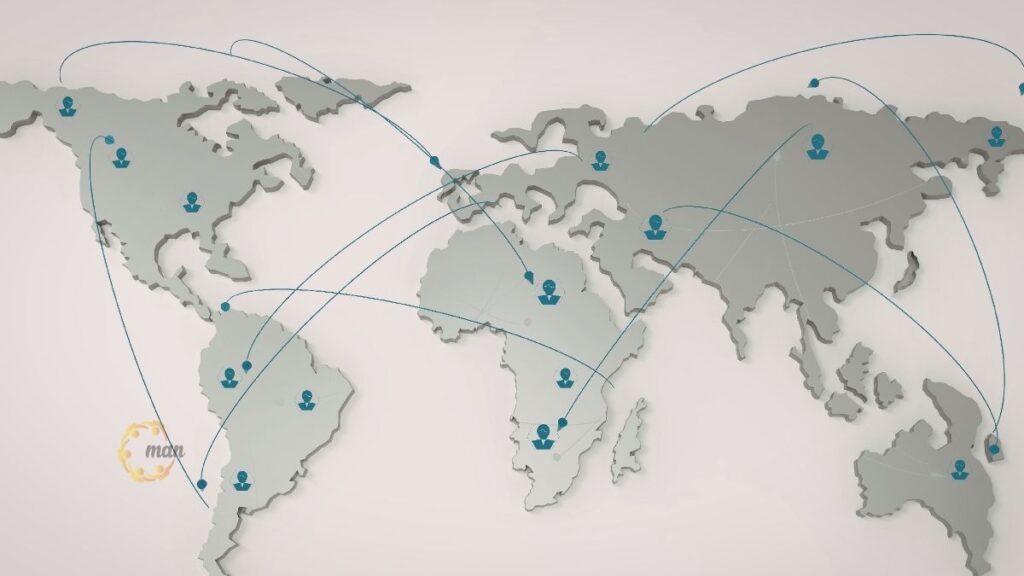
The Master File is a report that describes the entire business structure and strategy of a multinational corporation, including how the corporation generates profits, allocates assets, and conducts internal transactions between its subsidiary companies.
The primary objective of the Master File is to help tax authorities understand the corporation's operating model in order to assess whether related-party transactions comply with the Arm's Length Principle.
What content does a Master File include?
A standard Master File typically includes the following main contents:
Corporate organizational structure
- Ownership chart and relationships between member companies.
- The geographical location of each legal entity within the group.
Business activity description
- The corporation's global value chain
- Key markets and revenue streams
- Key products or services.
Intangible assets
- Trademarks, technologies, patents
- Licensing and royalty collection policies among affiliated companies.
Internal financial operations
- Internal lending policy
- Capital structure and interest rates applied between related parties.
Financial information regarding taxes
- Consolidated financial statements of the group
- List of tax agreements or tax incentives in various countries.
The role of MasterFile in businesses
MasterFile plays a crucial role in:
- Demonstrate the reasonableness of the transfer pricing policy.
- Reduce the risk of being assessed taxes during an audit.
- Increase transparency in related-party transactions.
- Assisting businesses in complying with international tax regulations.
The Master File is a global record of a multinational corporation, describing its organizational structure, business operations, and transfer pricing policies to demonstrate that related-party transactions comply with tax regulations.
When the "rules of the game" change
The most challenging issue facing FDI businesses and multinational corporations (MNEs) is information discrepancies. A small error in the Master File (Global Profile) compared to local operations can trigger tax audits that last for years. Businesses can no longer simply "cope" by copying the parent company's records without making adjustments to suit the legal context in Vietnam (especially Decree 132/2020/ND-CP). To ensure safety, many businesses have turned to specialized agencies. Transfer pricing consulting services Professionalism is key. MasterFile is now more than just a compliance obligation; it's the ultimate "shield" protecting a business's legitimate profits against tax assessment risks.
Why has MasterFile become a "hot topic"?

Changes in the international tax environment, particularly the implementation of data management and anti-transfer pricing mechanisms, have made Master Files a focal point in tax audits. The following factors explain why these documents are receiving increasing attention from regulatory authorities.
The Global Minimum Tax Mechanism (Pillar Two) and the transparency of tax data.
By 2026, Pillar Two will no longer be just a concept on paper. With a minimum tax rate of 15%, any loopholes in transfer pricing will be exposed. The Master File is the document that provides a comprehensive overview of how the corporation allocates profits and pays taxes globally.
If the data in the Master File shows that a corporation is shifting profits to countries with low tax rates through intangible assets or internal services, but reports losses or low profits in Vietnam, the tax authorities will immediately raise suspicions. The inconsistency between the Master File and the Country-by-Country Report (CbCR) is a "verdict" confirming transfer pricing in the eyes of the tax authorities.
The devastating consequences of a lack of a proper Master File.
Don't mistakenly think that simply paying a fine is enough. The actual consequences are far more severe:
- Excluding interest expense: According to Decree 132/2020/ND-CP, if the commercial nature and conformity of the Master File cannot be proven, interest expense exceeding the 30% ceiling will be excluded. EBITDA This will be permanently excluded, significantly increasing the corporate income tax burden.
- Tax Assessment: When the Master File is not reliable enough, the tax authorities have the right to use their database to determine the profit margin for the business. This often results in the amount of tax payable being many times higher than the amount declared.
Example: A major electronics corporation in Bac Ninh Industrial Park was ordered to pay over 200 billion VND in back taxes in 2025 because its global tax return failed to clearly explain the value chain contribution of the entity in Vietnam, leading the tax authorities to reject the net profit comparison method (NPM) applied by the company. To avoid similar errors, the use of Full-service transfer pricing in Ho Chi Minh City This helps businesses maintain good control over records right from the start.
Comprehensive Solution: Understanding MasterFile Correctly
According to OECD guidelines (Action 13) and Decree 132/2020/ND-CP, a Master File is a set of documents containing standardized information for all members of a conglomerate (MNEs).
Unlike the Local File (Country File), which focuses on specific transactions of the entity in Vietnam, the Global File describes the general policies of the corporation. It answers the question: "Where does the corporation generate revenue, who owns key assets, and how are internal pricing policies established?".
Cases where Master File creation is waived
In Vietnam, according to Article 19 of Decree 132/2020/ND-CP, enterprises with related-party transactions are exempt from creating a Master File if they fall into one of the following cases:
- Revenue and transaction value threshold: Businesses must have total revenue generated during the tax period below VND 50 billion and the total value of all related-party transactions generated during the tax period below VND 30 billion.
- Advance Pricing Agreement (APA): The company has signed an APA with the tax authorities and submitted annual reports in accordance with the law on APA. (Note: Related party transactions not covered by APA must still be documented as required).
Businesses with simple functions and no revenue or expenses generated from intangible assets:
- The intangible assets are only used for simple business functions and do not generate revenue or incur costs from their exploitation or use.
- Revenue is below 200 billion VND.
- Apply the net profit margin before interest and corporate income tax (EBIT) to net revenue according to the following sectors: Distribution (from 5% onwards), Manufacturing (from 10% onwards), and Processing (from 15% onwards).
- Purely domestic transactions: Businesses only conduct transactions with related parties who are subject to corporate income tax in Vietnam, applying the same corporate income tax rate, and neither party enjoys any corporate income tax incentives during the tax period.
However, in the context of 2026, even if exempt from filing, businesses must still meticulously complete Appendix I (Information on related parties and related-party transactions). Businesses can refer to the following information. Transfer pricing service price list to plan a compliant budget.
Detailed structure of a standard Master File
For a Master File to be impactful with the tax authorities, it must be built upon the following five content pillars:
Organizational Structure and Ownership
The filing must provide a global ownership structure, clearly indicating the geographical location of each legal entity. In particular, detailed updates on M&A (mergers and acquisitions) activities are needed in 2026, as this is a time when corporations are undergoing significant restructuring to adapt to new tax laws.
Business activity description
This is the central part in demonstrating the "Nature of Transactions".
- Value Chain: An analysis of the five entities that contribute the most revenue to the corporation.
- Functional description: What role does Vietnam play? (Production based on orders, processing, or a limited-function sales unit?).
- Internal services: Describes agreements for providing management services, technical support, and cost allocation arrangements (Cost Contribution Arrangement – CCA).
Intangible assets
Intangible assets (trademarks, technology, trade secrets, etc.) are the most closely scrutinized elements:
- DEMPE analysis: Businesses must demonstrate which entities are involved in the stages of Development, Enhancement, Maintenance, Protection, and Exploitation.
- If a Vietnamese company pays royalties to an overseas entity, MasterFile must demonstrate that the recipient actually performs the function of managing and controlling the risks associated with that asset, rather than being merely a "shell" company.
Internal financial operations
The tax authorities will examine how the corporation finances its loans. Does its internal lending interest rate policy adhere to the arm's length principle? Is there "thin capitalization" used to shift profits through interest expenses?
The strategy for creating an "impenetrable" Master File in 2026.

To build a Master File that is convincing to the tax authorities, businesses need to apply systematic data management and transfer pricing analysis strategies. Below are the key factors that help make the Master File a solid legal shield in the context of increasingly stringent related-party transaction audits.
Consistency
A common mistake is that the revenue figures in the Master File (corporate level) don't match when adding up the figures. Local File. By 2026, the use of automated tax management software will be mandatory to ensure:
- Consistent financial data across all reports.
- The functional and risk arguments in the Master File must support the pricing methodology in the Local File.
In-depth FAR (Function, Asset, Risk) analysis
To protect profit margins, businesses need to conduct a detailed FAR analysis:
- Function: Human resource activities performed in Vietnam.
- Assets: Machinery, equipment, and especially local intellectual property.
- Risks: Market risk, inventory risk, and bad debt risk that the entity in Vietnam is facing.
Using technology in transfer pricing
In 2026, experts recommended using international databases such as Thomson Reuters or Bureau van Dijk To perform benchmarking (comparing profit margins), having accurate comparative data will make the Master File more convincing in the face of questions from the inspection team.
Compliance and Archiving Procedures

Creating a master file isn't a year-end task, but rather an ongoing process:
- Data collection: Starting in the first quarter of the fiscal year.
- Translation and Localization: Master files are typically created in English at the parent company. Businesses in Vietnam are required to translate them into Vietnamese and ensure that technical terminology is accurate according to Vietnamese law.
- Deadline: Documents must be ready before submitting the corporate income tax return.
- Storage: Storage must be maintained for at least 10 years. When a request is made, businesses have only 30 working days (extendable once for no more than 15 days) to submit the information. To ensure absolute accuracy, collaboration with a certified provider is recommended. reliable transfer pricing service This is the optimal solution.
See details: Deadline for submitting Related Party Transaction Documents.
Conclude
In the context of increasingly transparent global tax administration and continuously tightening regulations on related-party transactions, the Master File has become a crucial risk management tool for multinational corporations. A well-structured, consistent, and practical Master File not only helps businesses meet compliance requirements under Decree 132/2020/ND-CP but also significantly reduces the risk of audits, tax assessments, or tax arrears collection.
Therefore, instead of viewing Master File as a mere administrative formality, businesses should approach file creation as a long-term tax management strategy. Investing in accurate data, in-depth transfer pricing analysis, and timely updates on changes in international tax policies will help FDI businesses in Vietnam protect their legitimate profits and achieve sustainable growth in an increasingly competitive global business environment.
Contact information MAN – Master Accountant Network
- Address: No. 19A, Street 43, Tan Thuan Ward, Ho Chi Minh City
- Mobile/Zalo: 0903 963 163 – 0903 428 622
- E-mail: man@man.net.vn
Content production by: Mr. Le Hoang Tuyen – Founder & CEO MAN – Master Accountant Network, Vietnamese CPA Auditor with over 30 years of experience in Accounting, Auditing and Financial Consulting.