





Decree No. 20/2025/ND-CP and Decree No. 132/2020/ND-CP ceased to be in effect as of July 1, 2026, pursuant to Article 23 of Decree No. 255/2026/ND-CP. Starting with the 2026 corporate income tax filing period, businesses engaged in related-party transactions must comply with the provisions of Decree No. 255/2026/ND-CP.
Overview of regulations on related-party transactions under Decree 20/2025/ND-CP
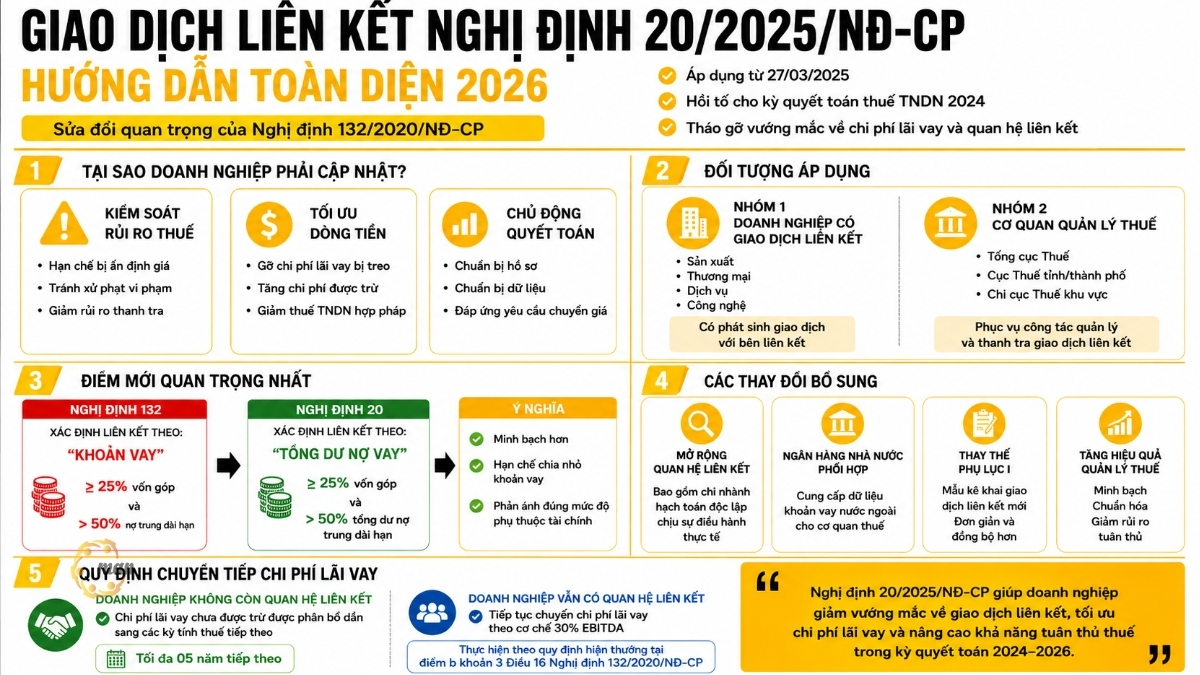
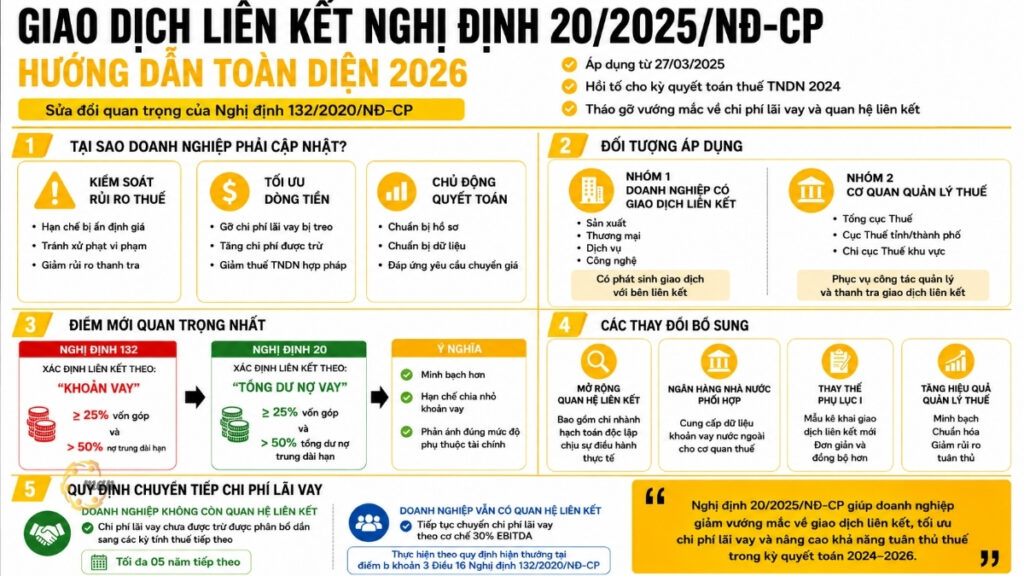
Decree 20/2025/ND-CP was signed and promulgated on February 10, 2025. The creation of this legal document is the result of listening to and incorporating feedback from the business community and professional consulting organizations. Throughout the period from 2020 to 2023, the practical application of Decree 132/2020/ND-CP revealed several major bottlenecks, particularly regarding the control of interest expense for businesses borrowing from financial institutions and commercial banks, which inadvertently led to the classification of related-party transactions due to overly broad quantitative criteria. Recognizing the need to address these difficulties, the mechanism for controlling related-party transactions in Decree 20 has been adjusted to be more reasonable, creating favorable conditions for businesses to recover their production and business activities.
In terms of legal effect, Decree 20/2025/ND-CP officially takes effect from March 27, 2025. However, the most significant and beneficial provision for taxpayers is the regulation allowing retroactive application starting from the 2024 corporate income tax (CIT) period. This means that in the 2024 CIT settlement period, businesses can immediately apply the flexible mechanisms and new reporting forms stipulated in this document.
Cập nhật theo Nghị định 255/2026/NĐ-CP: Nghị định 20/2025/NĐ-CP hết hiệu lực từ ngày 01/7/2026. Nghị định 20 vẫn là căn cứ để xác định nghĩa vụ thuế của kỳ tính thuế 2024, 2025 và để thực hiện chuyển tiếp chi phí lãi vay theo Điều 3. Các nội dung chính của Nghị định 20 (tiêu chí tổng dư nợ vay, chi nhánh hạch toán độc lập, trách nhiệm của Ngân hàng Nhà nước) được Nghị định 255/2026/NĐ-CP kế thừa và tiếp tục áp dụng từ kỳ tính thuế 2026.
The importance of updating related-party transactions under Decree 20.
Changes in tax policy are always accompanied by strategic adjustments in corporate financial management. Understanding the regulations on related-party transactions under Decree 20 helps businesses achieve the following:
- Legal risk control: Accurately identifying the company's affiliated position eliminates the risk of being subjected to price assessments, late payment penalties, or administrative tax penalties by tax authorities.
- Cash flow optimization: Clarifying and implementing flexible mechanisms regarding interest expense helps businesses release billions of dong in outstanding expenses from previous years, thereby significantly increasing after-tax profits.
- Proactive planning: This helps the accounting and finance department proactively prepare data, documentation, and transfer pricing records to meet the requirements of related-party transactions under Decree 20.
The subjects to which the regulations on related-party transactions of Decree 20 apply.

Do Nghị định 20/2025/NĐ-CP là văn bản sửa đổi, bổ sung một số điều của Nghị định 132/2020/NĐ-CP, nên đối tượng chịu sự điều chỉnh của giao dịch liên kết Nghị định 20 hoàn toàn nhất quán với phạm vi quy định tại Nghị định 132. Nghị định 255/2026/NĐ-CP tiếp tục giữ nguyên ba nhóm đối tượng này tại Điều 2:
- Tổ chức sản xuất, kinh doanh hàng hóa, dịch vụ (sau đây gọi chung là người nộp thuế) là đối tượng nộp thuế thu nhập doanh nghiệp có phát sinh giao dịch với bên có quan hệ liên kết theo quy định tại Điều 5 Nghị định này.
- Tax authorities
- Cơ quan Nhà nước, tổ chức, cá nhân khác có liên quan.
Organizations involved in the production and sale of goods and services give rise to linkage relationships.
Đây là nhóm đối tượng trung tâm và chịu tác động trực tiếp mạnh mẽ nhất. Cụ thể là các tổ chức sản xuất, kinh doanh hàng hóa, dịch vụ (sau đây gọi chung là người nộp thuế) là đối tượng nộp thuế thu nhập doanh nghiệp tại Việt Nam, có phát sinh các giao dịch thương mại, tài chính với các bên có quan hệ liên kết. Cho dù doanh nghiệp hoạt động trong lĩnh vực sản xuất, thương mại, dịch vụ hay công nghệ, chỉ cần đáp ứng các tiêu chuẩn xác định mối quan hệ liên kết thì đều phải thực hiện nghĩa vụ kê khai theo quy định về giao dịch liên kết. Từ kỳ tính thuế 2026, các tiêu chuẩn này được xác định theo Điều 5 Nghị định 255/2026/NĐ-CP.
Tax authorities and related government agencies
Nhóm đối tượng thứ hai là cơ quan thuế, trực tiếp thực thi, hướng dẫn và giám sát việc tuân thủ về giao dịch liên kết tại Việt Nam. Theo quy định về nguyên tắc áp dụng tại Nghị định 255/2026/NĐ-CP, cơ quan thuế quản lý, kiểm tra giá giao dịch liên kết của người nộp thuế theo nguyên tắc quy định tại khoản 4 Điều 6 và nguyên tắc kiểm tra thuế quy định tại khoản 1 Điều 22 Luật Quản lý thuế số 108/2025/QH15.
Ngoài ra, quy định này còn áp dụng đối với các cơ quan nhà nước khác, các tổ chức và cá nhân có liên quan đến việc áp dụng, xác minh, đối chiếu hoặc hỗ trợ cung cấp thông tin phục vụ công tác quản lý thuế đối với các trường hợp thuộc diện điều chỉnh về giao dịch liên kết.
Key amendments and additions to Decree 20 regarding related-party transactions.

Decree 20/2025/ND-CP focuses on amending several provisions of Decree 132/2020/ND-CP to address shortcomings in its practical application over the past period. The new points include:
Amend the regulations regarding the identification of related parties.
Decree 20/2025/ND-CP amends and supplements several important provisions related to the determination of related-party relationships as stipulated in Article 5 of Decree 132/2020/ND-CP. The changes focus on improving the criteria for determining related-party relationships through borrowing, financial guarantees, and expanding the scope of entities subject to actual management and control. These adjustments not only clarify the legal basis but also enhance transparency in tax declaration and management for enterprises with related-party transactions. The table below summarizes the notable changes. Decree 132 on related-party transactions and related-party transactions under Decree 20.
| Revised content | Decree 132/2020/ND-CP | Decree 20/2025/ND-CP | Meaning changed |
| Applicable to loan and guarantee relationships. | This applies to businesses that provide guarantees or loans in any form, including loans from third parties guaranteed by affiliated parties and financial transactions of a similar nature. | The scope of application remains unchanged for businesses providing loans or guarantees in any form, including third-party loans secured by affiliated parties. | There are no changes to the scope of application, ensuring the continuity of the current regulations. |
| Criteria for determining the relationship through lending activities | An affiliated relationship is defined when the loan has a minimum value equal to 25% of the owner's equity of the borrowing enterprise and accounts for more than 50% of the total value of the borrowing enterprise's medium and long-term debts. | The related party relationship is determined based on the total outstanding debt between the borrowing enterprise and the lending or guaranteeing enterprise, provided that the total outstanding debt reaches a minimum of 25% of the owner's equity and accounts for over 50% of the total outstanding medium and long-term debt. | Shifting from evaluating each loan individually to considering the total outstanding debt more accurately reflects the level of financial dependence between the parties. |
| Basis for determining the linkage threshold | Based on the value of the loan incurred. | Based on the total outstanding loan balance at the time of determination. | Increase transparency and limit the splitting of loans to avoid thresholds for determining the relationship between the borrower and the lender. |
| Regulations concerning operational and control relationships | This only provides general regulations regarding cases where a business is subject to the actual management, control, or decision-making power of another business in terms of its production and business activities. | The case of a branch with independent accounting that declares and pays corporate income tax is also included in the scope of consideration when it is subject to actual management, control, or decision-making. | Expanding and clarifying the scope of application helps to more fully identify related-party relationships in tax administration practice. |
| Scope of entities subject to management and control. | This only refers to businesses. | This includes businesses and independently accounting branches that are obligated to declare and pay corporate income tax. | Addressing legal loopholes and improving management efficiency for organizational models with multi-level structures or numerous dependent units. |
Nghị định 20/2025/NĐ-CP không làm thay đổi bản chất của các quy định về giao dịch liên kết nhưng đã bổ sung và làm rõ nhiều tiêu chí quan trọng. Đáng chú ý nhất là việc chuyển từ tiêu chí “khoản vay” sang “tổng dư nợ vay” khi xác định quan hệ liên kết và mở rộng phạm vi đối tượng chịu sự điều hành, kiểm soát thực tế sang chi nhánh hạch toán độc lập.
Cập nhật theo Nghị định 255/2026/NĐ-CP: Tiêu chí quan hệ liên kết từ kỳ tính thuế 2026
Nghị định 255/2026/NĐ-CP giữ nguyên hai điểm sửa đổi chính của Nghị định 20 và bổ sung thêm hai nội dung tại khoản 2 Điều 5. Các bên có quan hệ liên kết được xác định trước hết theo khoản 17 Điều 4 Luật Quản lý thuế số 108/2025/QH15, sau đó theo các trường hợp cụ thể tại khoản 2 Điều 5 Nghị định 255.
| Content | Decree 20/2025/ND-CP | Decree 255/2026/ND-CP |
| Tiêu chí tổng dư nợ vay (25% vốn góp chủ sở hữu và trên 50% tổng dư nợ trung, dài hạn) | Quy định tại điểm d khoản 2 Điều 5 Nghị định 132 (sửa đổi) | Giữ nguyên tại điểm d khoản 2 Điều 5 |
| Ngoại trừ tổ chức tín dụng độc lập | Have | Giữ nguyên; viện dẫn Luật Các tổ chức tín dụng (được sửa đổi, bổ sung tại Luật số 96/2025/QH15) |
| Chi nhánh hạch toán độc lập chịu điều hành, kiểm soát thực tế | Quy định tại điểm k | Keep it as is. |
| Ngoại trừ tổ chức mua, bán, xử lý nợ do Nhà nước sở hữu 100% vốn điều lệ | Not yet | Bổ sung mới |
| Giao dịch với cá nhân điều hành, kiểm soát doanh nghiệp hoặc người thân | Borrowing and lending at least 10% of owners' equity | Mở rộng thêm mượn, cho mượn |
Changes to the responsibilities of the State Bank and replacement of the Appendix I form.
Besides clarifying related parties, the new Decree amends and supplements Clause 2, Article 21 of Decree 132/2020/ND-CP, which specifically stipulates the responsibilities of the State Bank of Vietnam in coordinating tax management. The State Bank is responsible for coordinating the provision of information and data on foreign loans of enterprises with related-party transactions, assisting tax authorities in controlling cash flows and verifying the soundness of cross-border financial transactions in accordance with the regulations on related-party transactions in Decree 20.
Simultaneously, Article 2 of Decree 20/2025/ND-CP stipulates the replacement of the entire Appendix I – Information on related party relationships and related party transactions issued with Decree 132/2020/ND-CP – with the new Appendix I issued with Decree 20/2025/ND-CP. The reform of the related party transaction declaration form in Decree 20 helps standardize information flow, minimize redundant indicators, and integrate declaration content in accordance with the new amendments, supporting businesses in fulfilling their self-declaration and self-responsibility obligations more easily.
Cập nhật theo Nghị định 255/2026/NĐ-CP:
- Trách nhiệm phối hợp của Ngân hàng Nhà nước tiếp tục được quy định tại phần trách nhiệm của các cơ quan nhà nước trong Nghị định 255. Theo đó, Ngân hàng Nhà nước cung cấp thông tin về các khoản vay, trả nợ nước ngoài và dữ liệu liên quan theo yêu cầu của cơ quan thuế.
- Từ kỳ tính thuế 2026, người nộp thuế kê khai thông tin về quan hệ liên kết, giao dịch liên kết và tỷ lệ chi phí lãi vay theo Phụ lục I ban hành kèm theo Nghị định 255/2026/NĐ-CP. Phụ lục I theo Nghị định 20 áp dụng cho kỳ tính thuế 2024, 2025.
To help businesses proactively adapt, it is advisable to consult... related party transaction advisory services Consulting with specialized and experienced units will help minimize compliance risks and optimize tax administration efficiency.
Transitional provisions for interest expense deductions related to related-party transactions - Decree 20

Một trong những nội dung quan trọng đối với cộng đồng doanh nghiệp là cơ chế xử lý chi phí lãi vay không được trừ (phần vượt ngưỡng 30% EBITDA) tích lũy từ các năm trước. Điều 3 Nghị định 20/2025/NĐ-CP đã thiết lập một hành lang chuyển tiếp chi tiết và có lợi cho người nộp thuế. Quy định chuyển tiếp này vẫn tiếp tục được áp dụng sau khi Nghị định 20 hết hiệu lực, theo khoản 3 Điều 23 Nghị định 255/2026/NĐ-CP.
Conditions for the application of transitional provisions
Transitional provisions apply specifically to cases where, during the corporate income tax periods from 2020 to 2023, the borrowing enterprise fully meets the following conditions:
- The borrowing enterprise must only have an affiliated relationship with an economic organization operating in accordance with the Law on Credit Institutions as stipulated in point d, clause 2, Article 5 of Decree 132/2020/ND-CP.
- Businesses borrowing from lenders or guarantors fall under the cases specified in points d.1 and d.2 of Clause 2, Article 5 of Decree 132/2020/ND-CP, as amended and supplemented by Article 1 of Decree 20/2025/ND-CP.
- There are related-party transactions falling within the scope of regulation under Clause 2, Article 1 of Decree 132/2020/ND-CP.
- There are certain interest expenses that are not deductible according to point a, clause 3, Article 16 of Decree 132/2020/ND-CP.
Starting from the 2024 tax year, the handling of non-deductible and uncashed interest expense amounts up to the end of the 2023 tax year for entities affected by the regulations on limiting interest expense on related-party transactions under Decree 20 will be consistently implemented according to the following two classification approaches:
| Case | Guidelines for handling deductible interest expenses accumulated up to the end of the 2023 tax period. | Legal basis for application |
| The enterprise has no related-party relationship and no related-party transactions as stipulated in Decree 132/2020/ND-CP and Decree 20/2025/ND-CP. | This uncredited portion of interest expense will be allocated evenly and carried forward to subsequent tax periods for the remaining time (not exceeding 05 consecutive years from the year following the year in which the expense was incurred). | According to the regulations on the time period for carrying forward interest expenses at point b, clause 3, Article 16 of Decree 132/2020/ND-CP. |
| Businesses have related-party relationships and related-party transactions as stipulated in Decree 132/2020/ND-CP and Decree 20/2025/ND-CP. | The portion of interest expense that is not deductible and has not been carried forward to subsequent tax periods is carried forward normally (offset against the 30% EBITDA threshold of the carrying year). | In accordance with the usual provisions at point b, clause 3, Article 16 of Decree 132/2020/ND-CP. |
The transitional provisions for related-party transactions in Decree 20 have thoroughly resolved the issue of interest expense for thousands of businesses in the previous period. For businesses that are no longer considered related-party transactions, the mechanism of evenly allocating the remaining time is an extremely favorable way to record reasonable expenses and legitimately minimize the amount of corporate income tax payable.
Cập nhật theo Nghị định 255/2026/NĐ-CP: Chuyển tiếp từ kỳ tính thuế 2026
Nghị định 255/2026/NĐ-CP quy định chuyển tiếp từ kỳ tính thuế 2026, cụ thể như sau:
- Doanh nghiệp đang được chuyển tiếp theo Điều 3 Nghị định 20: Tiếp tục phân bổ hoặc chuyển phần chi phí lãi vay còn lại cho thời gian còn lại theo đúng Điều 3 Nghị định 20 (khoản 3 Điều 23 Nghị định 255). Thời hạn tối đa 05 năm không được tính lại từ đầu khi chuyển sang Nghị định 255.
- Ngưỡng khống chế chi phí lãi vay từ kỳ 2026: Điều 16 Nghị định 255/2026/NĐ-CP tiếp tục quy định tổng chi phí lãi vay (sau khi trừ lãi tiền gửi và lãi cho vay) được trừ không vượt quá 30% của tổng lợi nhuận thuần từ hoạt động kinh doanh, cộng chi phí lãi vay (sau khi trừ lãi tiền gửi và lãi cho vay) và chi phí khấu hao phát sinh trong kỳ. Phần vượt ngưỡng được chuyển sang kỳ sau, tối đa 05 năm liên tục kể từ năm tiếp sau năm phát sinh.
- Với các khoản chi phí lãi vay vượt ngưỡng phát sinh từ kỳ 2026, căn cứ chuyển kỳ là khoản 3 Điều 16 Nghị định 255/2026/NĐ-CP, không còn là điểm b khoản 3 Điều 16 Nghị định 132.
Conclude
Giao dịch liên kết Nghị định 20 đánh dấu bước hoàn thiện quan trọng trong khung pháp lý về quản lý thuế đối với doanh nghiệp có quan hệ liên kết tại Việt Nam, làm rõ tiêu chí xác định quan hệ liên kết thông qua hoạt động vay vốn, bảo lãnh và mở rộng phạm vi đối tượng chịu sự điều hành, kiểm soát thực tế. Từ ngày 01/7/2026, các nội dung này được Nghị định 255/2026/NĐ-CP kế thừa, đồng thời bổ sung ngoại trừ đối với tổ chức mua, bán, xử lý nợ do Nhà nước sở hữu 100% vốn và mở rộng sang giao dịch mượn, cho mượn với cá nhân điều hành, kiểm soát.
Khi rà soát, doanh nghiệp cần xác định đúng văn bản theo kỳ tính thuế: Nghị định 20 cho kỳ 2024 – 2025, Nghị định 255/2026/NĐ-CP áp dụng từ kỳ tính thuế 2026, và Điều 3 Nghị định 20 cho phần chi phí lãi vay đang chuyển tiếp. Việc chủ động rà soát cơ cấu sở hữu, các khoản vay, mượn nội bộ, chính sách giá chuyển nhượng và nghĩa vụ kê khai Phụ lục I giúp hạn chế rủi ro xử phạt, truy thu và ấn định thuế.
Contact MAN – Master Accountant Network For free support and advice!
Contact information MAN – Master Accountant Network
- Address: No. 19A, Street 43, Tan Thuan Ward, Ho Chi Minh City
- Mobile/Zalo: 0903 963 163 – 0903 428 622
- E-mail: man@man.net.vn
- Google Business Profile: View MAN – Master Accountant Network's Google Business Profile
- LinkedIn Founder: View expert Le Hoang Tuyen's LinkedIn profile.
Responsible for production and professional content review by: Mr. Le Hoang Tuyen – Founder & CEO of MAN – Master Accountant Network. He is a CPA Vietnam auditor with over 30 years of in-depth experience in accounting, auditing, taxation, and corporate legal consulting.
Câu hỏi thường gặp về giao dịch liên kết Nghị định 20
Nghị định 20/2025/NĐ-CP còn hiệu lực không?
Không. Nghị định 20/2025/NĐ-CP và Nghị định 132/2020/NĐ-CP hết hiệu lực từ ngày 01/7/2026 theo khoản 2 Điều 23 Nghị định 255/2026/NĐ-CP. Từ kỳ tính thuế TNDN năm 2026, doanh nghiệp áp dụng Nghị định 255. Nghị định 20 vẫn là căn cứ cho kỳ tính thuế 2024, 2025 và cho quy định chuyển tiếp tại Điều 3.
How does converting from a loan to total debt affect a business?
Quy định mới giúp phản ánh đầy đủ hơn bản chất của mối quan hệ tài chính giữa các bên. Thay vì chỉ xem xét từng khoản vay riêng lẻ, cơ quan thuế sẽ đánh giá tổng dư nợ vay thực tế tại thời điểm xác định quan hệ liên kết. Điều này làm giảm khả năng chia nhỏ các khoản vay để tránh ngưỡng xác định giao dịch liên kết và tăng tính minh bạch trong quản lý thuế. Tiêu chí tổng dư nợ tiếp tục áp dụng từ kỳ tính thuế 2026 theo Nghị định 255.
Does a business borrowing from a bank constitute a related-party transaction?
Thông thường, khoản vay từ tổ chức tín dụng độc lập không làm phát sinh giao dịch liên kết. Tuy nhiên, nếu khoản vay được bảo lãnh hoặc bảo đảm bởi một bên liên kết và đáp ứng các tiêu chí về tổng dư nợ theo điểm d khoản 2 Điều 5 Nghị định 255/2026/NĐ-CP, doanh nghiệp vẫn có thể bị xác định là có quan hệ liên kết. Vì vậy, cần xem xét bản chất của giao dịch thay vì chỉ căn cứ vào chủ thể cho vay. Từ kỳ 2026, Nghị định 255 bổ sung thêm trường hợp ngoại trừ đối với chủ nợ, bên bảo lãnh là tổ chức do Nhà nước sở hữu 100% vốn điều lệ có chức năng mua, bán, xử lý nợ.
Chi phí lãi vay không được trừ phát sinh trước năm 2024 được xử lý như thế nào sau khi Nghị định 20 hết hiệu lực?
Việc xử lý chi phí lãi vay không được trừ vẫn phụ thuộc vào tình trạng quan hệ liên kết và giao dịch liên kết của doanh nghiệp. Đối với doanh nghiệp thuộc đối tượng chuyển tiếp theo Điều 3 Nghị định 20/2025/NĐ-CP, khoản 3 Điều 23 Nghị định 255/2026/NĐ-CP cho phép tiếp tục chuyển tiếp cho thời gian còn lại theo Điều 3 Nghị định 20. Doanh nghiệp tiếp tục được phân bổ và chuyển sang các kỳ tính thuế tiếp theo trong thời hạn tối đa 05 năm kể từ năm tiếp sau năm phát sinh chi phí.
Doanh nghiệp mượn tiền của giám đốc hoặc người thân của giám đốc có phát sinh quan hệ liên kết không?
Có thể. Từ kỳ tính thuế 2026, điểm l khoản 2 Điều 5 Nghị định 255/2026/NĐ-CP xác định quan hệ liên kết khi doanh nghiệp vay, cho vay, mượn, cho mượn ít nhất 10% vốn góp của chủ sở hữu tại thời điểm phát sinh giao dịch trong kỳ tính thuế với cá nhân điều hành, kiểm soát doanh nghiệp hoặc người thân theo điểm g. Trước đây, Nghị định 132 và Nghị định 20 chỉ đề cập vay, cho vay.